Pantry & Shopping
Buying olive oil without believing the label
The words on the front are less informative than the bottle it comes in and the date on the back.
Everything here earned its place by changing an outcome. Nothing about buying olive oil is included to round the number up.
What matters most
- Light, heat and time are what degrade oil, not the price paid for it.
- A harvest date tells you more than a best-before date.
- Extra virgin does have a smoke point suitable for most home cooking.
What the grades mean
Extra virgin means mechanically extracted without heat or solvents and meeting chemical and sensory criteria, which is a real distinction rather than marketing. Plain olive oil, sometimes labelled pure or light, has generally been refined, which strips flavour and most of the aromatic compounds.
Light in that context refers to flavour and colour, not to calories, which are the same for every oil. Enforcement of these categories varies by country, and adulteration has been a documented problem in the trade for decades.
The bottle matters
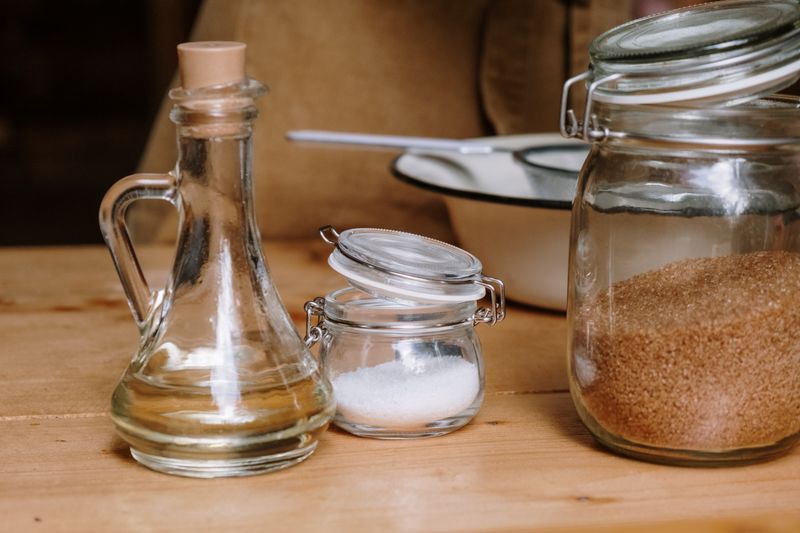
Light degrades olive oil quickly, which is why dark glass or a tin is worth choosing over a clear bottle every time. A clear bottle sitting under supermarket lights has been losing quality since it arrived on the shelf. At home the same logic applies: the worst place for oil is next to the hob, where it gets light and heat together.
Nine times out of ten, a cool dark cupboard and a bottle you finish within a few months solves most of the problem.
Dates are more useful than descriptions
Olive oil does not improve with age, so a harvest or pressing date is far more useful than a best-before date two years out. Producers confident about freshness tend to state the harvest; those who are not print a distant best-before instead. A very cheap oil with no origin detail beyond a blend of European oils is a commodity product and should be bought as one.
The part that matters: buying a size you will finish in a couple of months beats buying a large tin that goes stale halfway down.
Smoke point is misunderstood
Good extra virgin olive oil has a smoke point comfortably above normal sautéing and roasting temperatures, so the common warning is overstated. Its antioxidants actually make it fairly stable to heat compared with some highly polyunsaturated oils. What you do lose with heat is the delicate aroma you paid for, which is the real argument for cooking with something cheaper.
For deep frying, the volume required makes an expensive oil a poor choice on cost alone.
Taste is learnable
Fresh extra virgin should smell green and taste peppery, sometimes strongly enough to catch at the back of the throat. That peppery bite comes from polyphenols and is a sign of freshness rather than a fault. Rancid oil smells like old nuts, crayons or putty, and once you have noticed it you will notice it everywhere.
In practice, tasting a spoonful of a new bottle takes ten seconds and tells you more than any label.
Ovens, pans and produce vary — trust what you can see and hear over any timing.
Two oils are enough
One inexpensive oil for cooking and one good extra virgin for dressing and finishing covers a home kitchen. Neutral oils with a high smoke point are useful for searing and frying where you want no flavour contribution. Butter, which browns and burns at a much lower temperature, is a flavour ingredient rather than a cooking medium at high heat.
The part that matters: storing the finishing oil away from the hob is the one habit that protects the money you spent on it.
Everything above, in order of what to do first
- What the grades mean. Extra virgin means mechanically extracted without heat or solvents and meeting chemical and sensory criteria, which is a real distinction rather than marketing.
- The bottle matters. Light degrades olive oil quickly, which is why dark glass or a tin is worth choosing over a clear bottle every time.
- Dates are more useful than descriptions. Olive oil does not improve with age, so a harvest or pressing date is far more useful than a best-before date two years out.
- Smoke point is misunderstood. Good extra virgin olive oil has a smoke point comfortably above normal sautéing and roasting temperatures, so the common warning is overstated.
- Taste is learnable. Fresh extra virgin should smell green and taste peppery, sometimes strongly enough to catch at the back of the throat.
- Two oils are enough. One inexpensive oil for cooking and one good extra virgin for dressing and finishing covers a home kitchen.
The takeaway
Dark bottle, recent harvest, a size you will finish, and keep it away from the hob.
The good version is the one you can make on a Wednesday.
Questions readers ask
Does olive oil go off?
It goes rancid rather than unsafe, and the flavour becomes stale and cardboard-like. Light, heat and air accelerate it, so a dark bottle in a cupboard lasts longest.
Should olive oil go cloudy in the fridge?
Chilling does cause cloudiness, but the old idea that this proves authenticity is wrong. Refined and adulterated oils cloud too, so it tests nothing.
Also by Hugo Lefevre
- What to keep in a cupboard so dinner is always possiblePantry & Shopping
- Most food waste is a storage problem, not a cooking onePantry & Shopping
- Rice varieties are not interchangeable, and starch is whyPantry & Shopping
- Shopping for meat by cut instead of by namePantry & Shopping