Kitchen Kit
Tongs, a fish slice and a spoon are what you actually reach for
Utensil drawers fill with specialist tools that get used twice a year. Three or four items handle almost everything, and it is worth buying those properly.

The theory of turners and tongs is well covered elsewhere. This is about the version you meet in practice.
What holds up in practice
- Tongs give control over individual pieces that no spoon can match.
- A thin flexible turner slides under food without tearing it.
- Material matters because of heat tolerance and what it will do to a pan surface.
Why tongs dominate
Tongs let you pick up one item, turn it and place it precisely, which is something no other utensil does well. That control matters most when browning, since each piece needs turning at the moment it is ready rather than all at once. They also keep your hands away from a hot pan, which a fork or a spoon does considerably less well.
A locking mechanism and a decent spring make the difference between a tool you enjoy and one you fight. Length matters more than people expect, since a short pair puts your hand directly over the heat.
The turner is a specific shape
A good turner is thin at the leading edge and flexible enough to follow the surface of the pan. A thick rigid one cannot get underneath anything delicate and tears it instead of lifting it.
Slots reduce the surface area and let fat drain, which matters when moving something from a pan to a plate. A slight offset in the handle keeps your knuckles clear of the pan rim, which is worth more than it sounds. This is a tool where the cheap version is genuinely worse rather than merely less pretty.
Spoons do more than stir
A large spoon stirs, tastes, spoons over, transfers and portions, which is a wider range than any other single item. A wooden spoon tolerates heat and will not scratch, though it stains and holds smells over time.
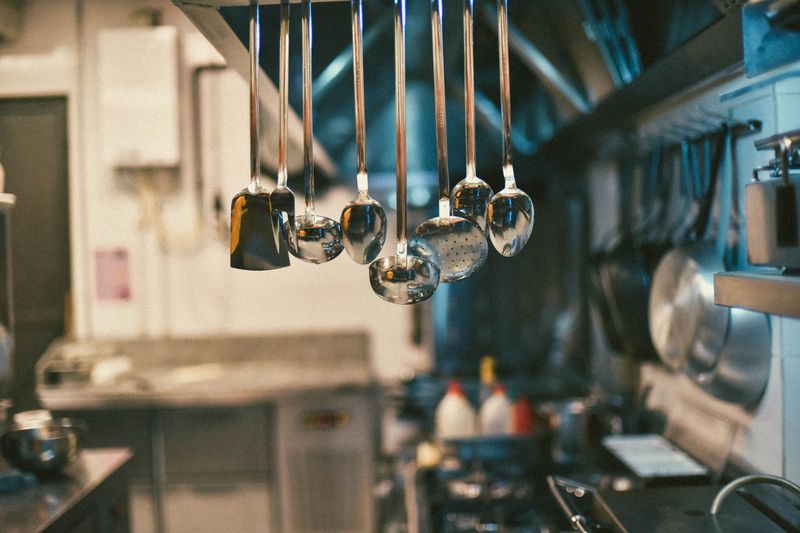
At the stove, a metal spoon scrapes the base of a pan more effectively, which matters when browned residue needs lifting. A ladle is a spoon specialised for liquid, and it is one of the few specialist items that genuinely earns its space. Having two or three spoons in constant rotation is far more practical than owning one perfect spoon.
Material and pan surfaces
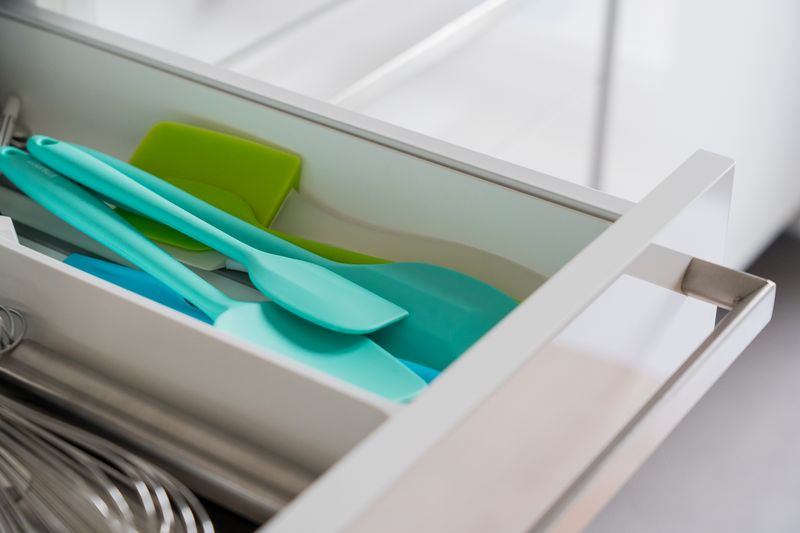
Metal utensils scratch non-stick coatings, which shortens the life of the pan considerably. Silicone and wood are safe on every surface, though silicone has a stated heat limit that varies by product.
In practice, nylon and similar plastics can soften or melt against a hot pan and are the most likely to fail unexpectedly. Metal is the right choice for hard scraping and for any pan without a coating to protect.
Keeping one set for coated pans and one for uncoated is a reasonable arrangement in a kitchen that has both.
What actually gets used rarely
Single-purpose gadgets designed for one ingredient are the classic drawer filler and are usually replaceable by a knife. Anything that requires assembly or washing in several parts tends to be avoided in practice, however clever it is.
The part that matters: tools that duplicate something you already own get used only when the original is dirty, which is not a reason to own them. Emptying the drawer and returning only what has been used in the past month is a clarifying exercise. The point is not minimalism but access, since a full drawer makes the useful items harder to find.
If you are cooking for allergies, check every label rather than any recipe.
Buying once
These are tools used daily for years, which changes the calculation about what is worth spending. Solid construction with no joint that traps food is the main practical durability question.
Handles that stay cool, hang easily and do not roll off a worktop are small advantages that compound over time. Dishwasher tolerance matters if you use one, since a tool that must be washed by hand gets used less. A small number of good tools kept where you can reach them beats a large drawer of adequate ones.
The takeaway
Buy good tongs, a thin flexible turner and two spoons, and take everything else out of the drawer.
Taste it before it leaves the pan. That is most of cooking.
Questions readers ask
What is the one utensil worth spending money on?
Tongs, for most people. They are used constantly, the cheap ones have weak springs and poor alignment, and the good ones last for years.
Can I use metal utensils in a non-stick pan?
Better not to. Metal scratches the coating, and once it is damaged the pan loses the property you bought it for. Keep silicone or wood for coated pans.