Technique
Browning And Caramelising Are Two Different Reactions
Caramelisation is sugar breaking down alone while browning involves sugar reacting with protein, and the two need different conditions and produce different flavours.

Both reactions turn food brown and both smell good, which is why they get used as synonyms. They involve different ingredients and behave differently in a pan.
Caramelisation needs only sugar and heat
Heat sugar far enough and it decomposes on its own, breaking into hundreds of smaller compounds that carry the bitter, nutty, slightly fruity character of caramel.
It requires high temperatures, well above boiling, which is why it happens on dry surfaces and never inside a simmering liquid.
Different sugars caramelise at different points, which is one reason a fruit high in fructose colours in a pan sooner than a starchy vegetable does.
Browning requires protein as well
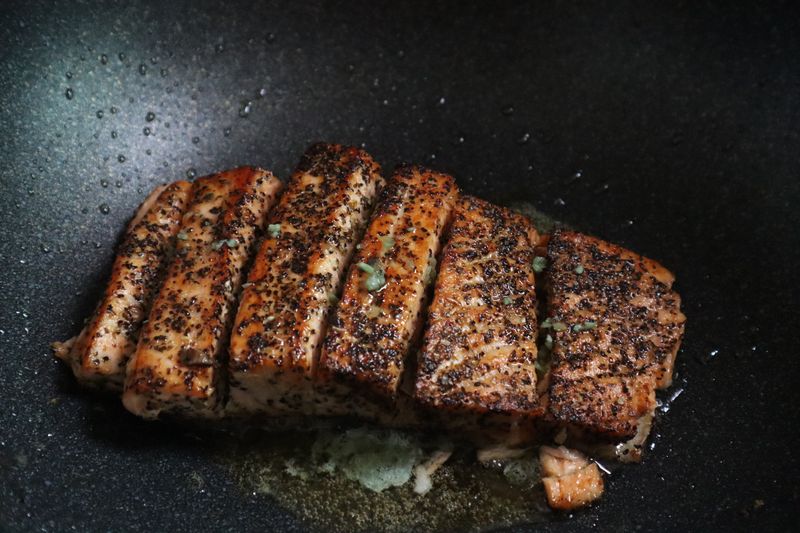
The reaction responsible for a seared steak, a bread crust and roasted coffee is between sugars and amino acids from protein. It produces a different and broader set of flavour compounds.
It runs at lower temperatures than caramelisation, which is why meat browns before its surface sugars would ever have coloured alone.
Because it needs both partners, foods low in one or the other brown poorly. This is why brushing a pastry with egg or milk makes such a visible difference.
Water is the limiting factor for both
While liquid water remains at a surface, that surface cannot exceed boiling point, and neither reaction proceeds meaningfully.
So the practical instruction is always the same: dry the surface, do not crowd the pan, and let evaporation finish before expecting colour.
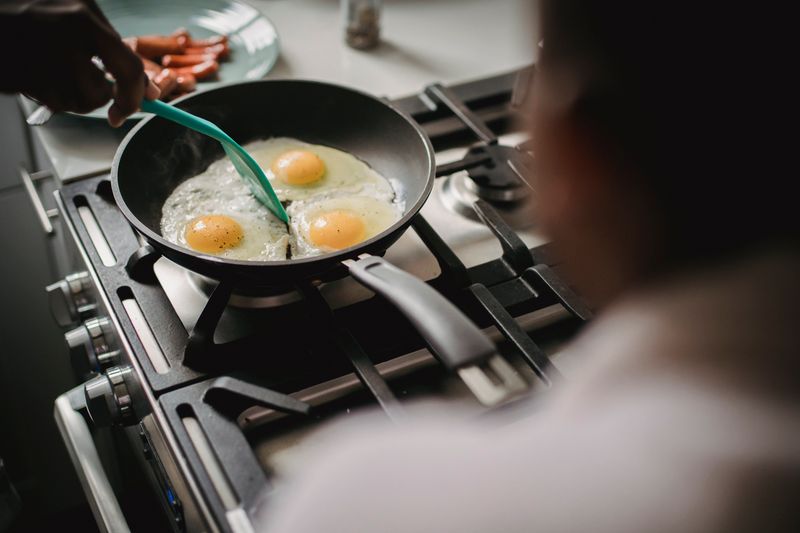
A crowded pan traps steam, holds every surface at boiling and produces grey food that has technically cooked without ever browning.
Alkalinity and sugar availability are levers
Browning speeds up in alkaline conditions, which is why a pinch of bicarbonate makes onions colour far faster, at some cost to their texture.
Adding a little sugar to a surface accelerates both reactions by supplying the missing partner, which is what a honey glaze is doing beyond flavour.
Acidic surfaces brown more slowly, so a heavily marinated piece of meat may need its surface wiped before it will colour properly.
Knowing which one you want
Onions cooked slowly are largely caramelising their own sugars, and the sweetness that develops has no protein-driven savoury depth to it.
A roast develops both at once, since the surface has protein, sugar and enough dryness to exceed boiling point across a long cook.
Recognising which reaction a dish depends on tells you what to change: more heat and dryness for one, a protein or sugar addition for the other.
Questions readers ask
Should I use oil or butter?
Oil for the sear because it tolerates higher temperature, then butter toward the end for flavour and browning. Butter alone burns before a good crust forms.
How do I know the pan is hot enough?
A drop of water should skitter across the surface rather than sizzle in place. For oil, it should shimmer and move freely.
Also by Orla Bannon
- Ten meals is a repertoire, and it is enoughWeeknight Dinners
- Knife skills are about the board, the grip and the speed you are not usingKitchen Kit
- Dried pulses against tins: what you actually gain by soakingPantry & Shopping
- The freezer is a pantry and most people use a third of itPantry & Shopping