Technique
Putting a lid on changes the cooking, not just the speed
A lid traps steam, and steam does completely different things to food than dry air does. Most recipes assume you know which one they want.
This works through using a lid in the order the parts actually depend on each other.
The short version
- A covered pan holds a wet environment capped near boiling point.
- Nothing browns while a lid is on, because the surface stays wet.
- A lid also stops liquid reducing, which changes the final sauce.
What the lid actually does
A lid traps water vapour, which condenses on the surface of the food and on the lid itself and drips back. That keeps the whole environment saturated and holds the surface temperature near the boiling point of water.
Heat then transfers by steam and condensation rather than by hot dry air, which is far more efficient at those temperatures. Everything else that follows, good and bad, comes from those two facts.
When you want it on
Anything that should stay moist and cook through gently benefits: braises, steamed vegetables, rice and gentle simmering. It is also the fastest way to soften something without colouring it, which is what sweating onions is. A lid dramatically reduces evaporation, so a long cook does not dry out and need topping up.
It saves energy too, since less heat is carried away with escaping steam.
When you want it off
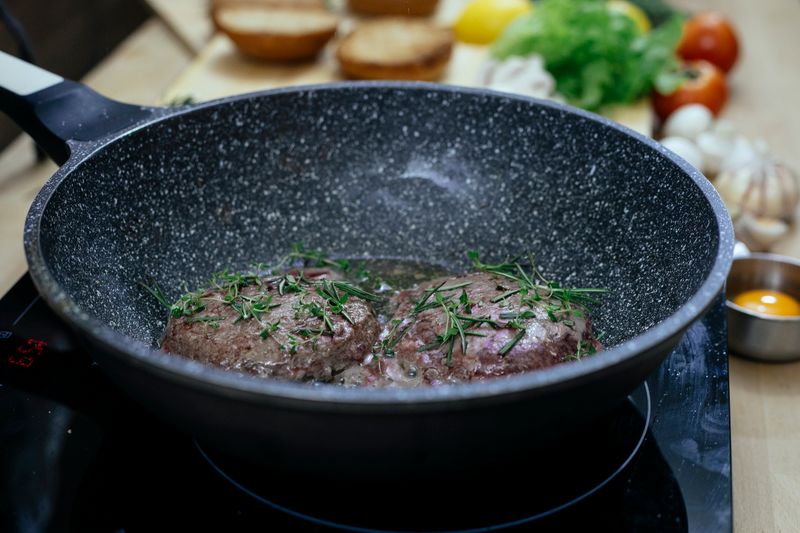
Anything that needs to brown, crisp or reduce needs an open pan, because all three require water to leave. A lid on a searing pan turns a sear into a steam and the crust you built softens within a minute. Sauces and stews thicken by evaporation, which cannot happen under a lid.
The part that matters: roasting is the same principle in an oven, which is why covering a tray gives soft food and uncovering gives colour.
Using it in stages
Many methods want both: lid on to cook through, lid off to colour and reduce. Sweating onions covered and then browning them uncovered is a common example that most recipes compress into one line. Bread baked covered then uncovered is the same idea, trapping steam for the rise and releasing it for the crust.
Deciding which phase you are in is more useful than following the instruction blindly.
Partial covering and paper lids
A lid set slightly ajar lets some steam escape while keeping most of the heat, which suits a long simmer that should reduce slowly. A cartouche, which is a disc of paper laid directly on the surface, reduces evaporation without sealing the pan.
This is standard for braises where you want the food submerged in a liquid that concentrates gently. A heavy lid seals better than a light one, which is why cast iron pots hold moisture so well.
If you are cooking for allergies, check every label rather than any recipe.
Practical consequences
A lidded pot boils considerably faster, which is worth doing for pasta water even if the lid comes off afterwards. Condensation dripping back into hot fat causes spitting, which is why a lid over a frying pan is a splatter risk.
Removing a hot lid toward yourself delivers a face full of steam, and steam burns at the same temperature as boiling water. A glass lid lets you watch without lifting, which matters most in situations where opening costs you heat.
The takeaway
Lid on to cook through, lid off to brown or reduce, and know which one you are doing.
The good version is the one you can make on a Wednesday.
Questions readers ask
Should I cover a stew while it cooks?
Covered for the long tender phase, then uncovered at the end if the sauce needs thickening. Doing it entirely uncovered wastes liquid you then have to replace.
Why does covered rice work better?
The trapped steam cooks the grains evenly and stops the liquid escaping, so the ratio you measured is the ratio the rice gets.