Technique
Starting Cold Or Starting Hot Changes The Result
Whether food goes into a cold pan or a hot one determines how fat renders, how proteins stick and whether the interior cooks before the surface colours.
Recipes specify a hot pan so often that starting cold looks like a mistake. For several ingredients it is the correct instruction and the reasons are physical.
Rendering fat needs time at low heat
Fat has to melt out of tissue before it can fry anything, and that happens gradually at moderate temperatures rather than instantly at high ones.
Bacon, sausages and skin-on poultry started in a cold pan warm through as the fat liquefies, and the food then fries in its own rendered fat.
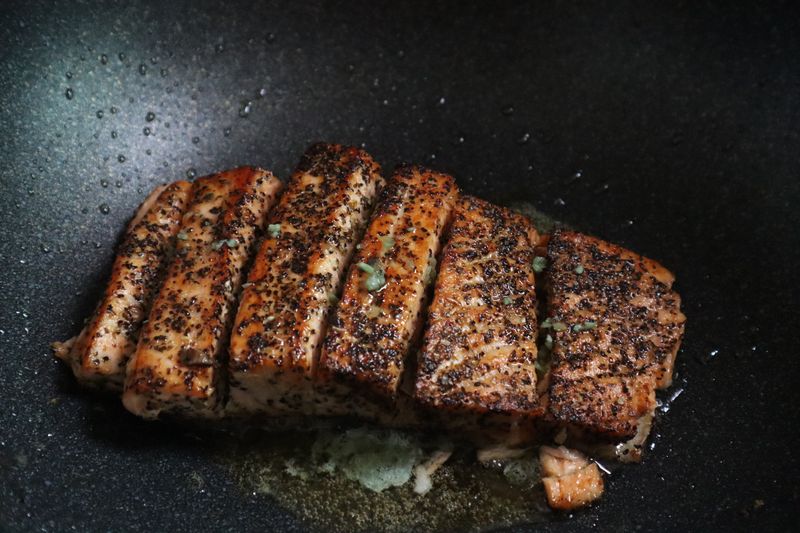
Dropped into a hot pan instead, the outside sets and browns before the fat has left, leaving a crisp exterior over an unrendered, flabby layer.
Sticking is a bonding problem
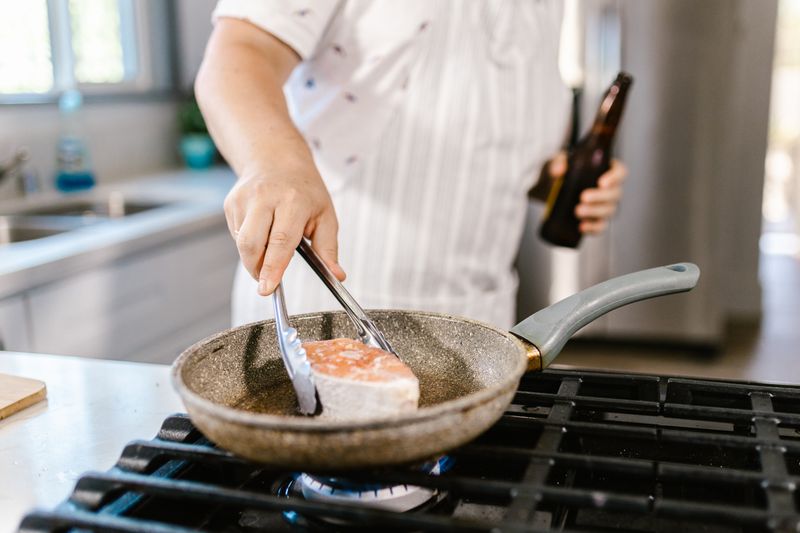
Proteins form bonds with hot metal surfaces on contact. A very hot pan sets a crust quickly, and once that crust has formed the food releases.
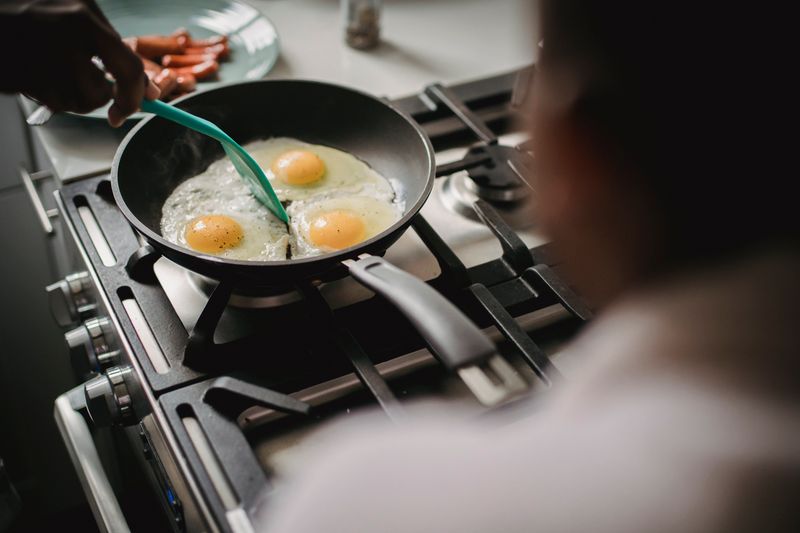
A moderately hot pan is the worst case, hot enough to bond and not hot enough to seal, which is where fish and eggs tear.
Starting genuinely cold with fat avoids the bonding phase differently, because the fat layer is between food and metal from the beginning and the protein sets gradually.
Thickness decides whether the interior keeps up
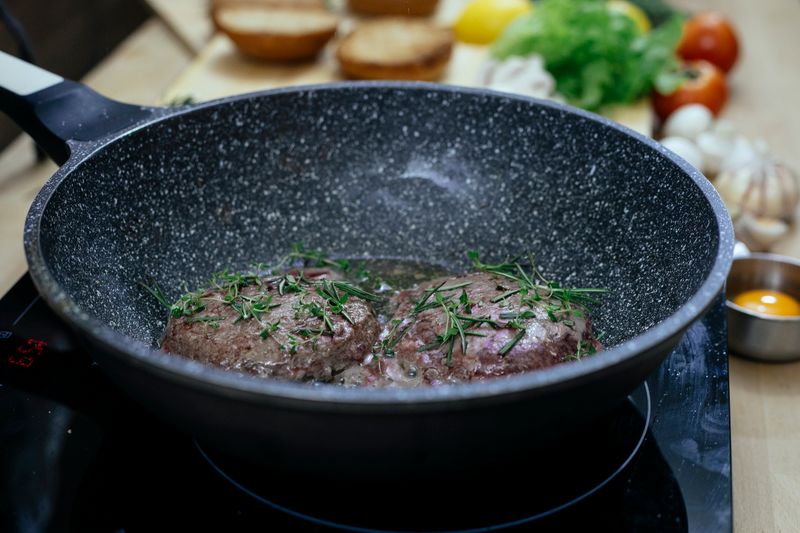
A hot pan browns the surface faster than heat travels inward, which suits thin items where the interior is done almost immediately.
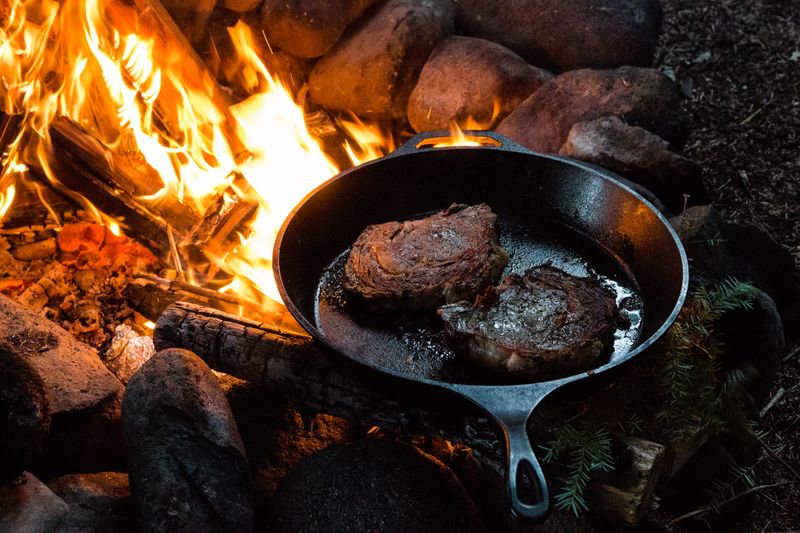
Thick items need the interior to catch up, so either a lower heat, a finish in the oven, or a cold start that lets the whole piece warm together.
This is the same reasoning behind reverse searing: heat the interior gently first, then apply high heat only to produce the surface.
Liquids follow the same rule
Stock started from cold water extracts more from bones and vegetables, because the slow rise lets soluble material dissolve before proteins coagulate and seal it in.
Potatoes started in cold water cook evenly, since dropping them into boiling water overcooks the outside before the centre softens.
Green vegetables want the opposite, going into fully boiling water so the time to reach cooking temperature is as short as possible and colour is preserved.
Judging the pan without a thermometer
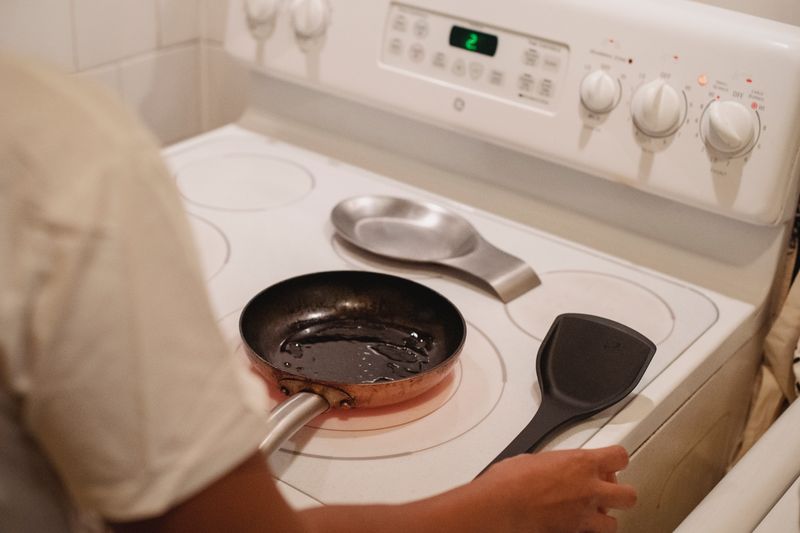
A drop of water skitters and evaporates instantly on a genuinely hot surface, while it sits and boils on a merely warm one.
Oil shows its own signals, shimmering and moving freely when hot enough, though visible smoke means it has passed the point where it should be used.
Whichever start is chosen, the pan should be given time to reach a steady state, because a pan still climbing in temperature cooks unpredictably from one minute to the next.
Questions readers ask
Should I use oil or butter?
Oil for the sear because it tolerates higher temperature, then butter toward the end for flavour and browning. Butter alone burns before a good crust forms.
How do I know the pan is hot enough?
A drop of water should skitter across the surface rather than sizzle in place. For oil, it should shimmer and move freely.
Also by Orla Bannon
- Ten meals is a repertoire, and it is enoughWeeknight Dinners
- Knife skills are about the board, the grip and the speed you are not usingKitchen Kit
- Dried pulses against tins: what you actually gain by soakingPantry & Shopping
- The freezer is a pantry and most people use a third of itPantry & Shopping