Technique
Stirring Does Two Opposite Jobs Depending On The Pot
Stirring either releases starch and builds creaminess or moves heat and prevents catching, and confusing the two ruins risotto and stew in different ways.
Stirring is treated as generic kitchen activity. It is actually several different interventions with different aims, and the wrong one damages the dish.
Agitation releases starch from the surface
Grains and pasta shed starch into their cooking liquid, and friction between the pieces accelerates that release considerably.
In a risotto that is the point. Constant movement rubs starch off the rice into the liquid, which thickens into the creamy suspension the dish is defined by.
In a pot of rice meant to have separate grains the same action is destructive, which is why those recipes say to keep the lid on and not to touch it.
Stirring moves heat as well as food
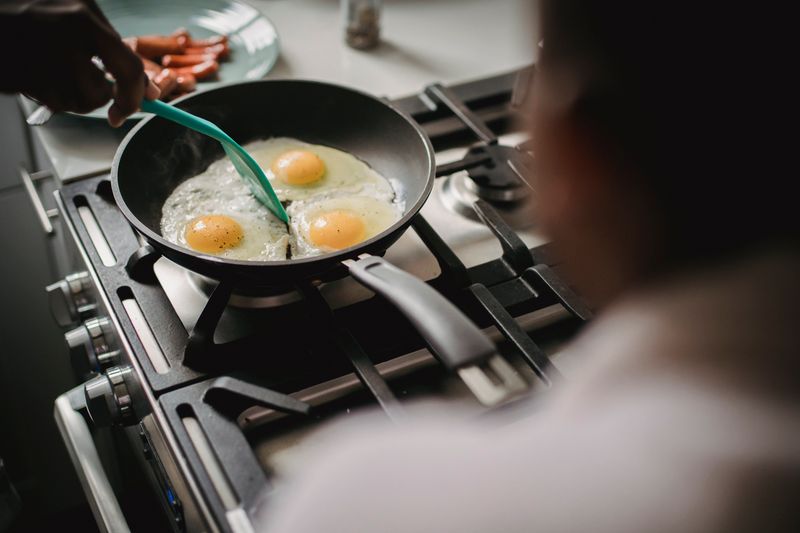
The base of a pan is much hotter than the liquid above it, and anything resting there scorches while the rest of the pot is merely simmering.
Stirring circulates that material away from the base and brings cooler liquid down, which is the only reason many thick sauces need attention at all.
Thickness determines how often this is needed. A thin soup convects on its own, while a reduced tomato sauce or a custard has almost no internal circulation.
Physical damage is the cost
Anything soft loses its shape under repeated contact with a spoon, so stirring a stew of tender vegetables breaks them into the sauce.
Braises are stirred rarely for this reason, and a well-made one arrives with pieces intact because it was left alone and shaken rather than stirred.
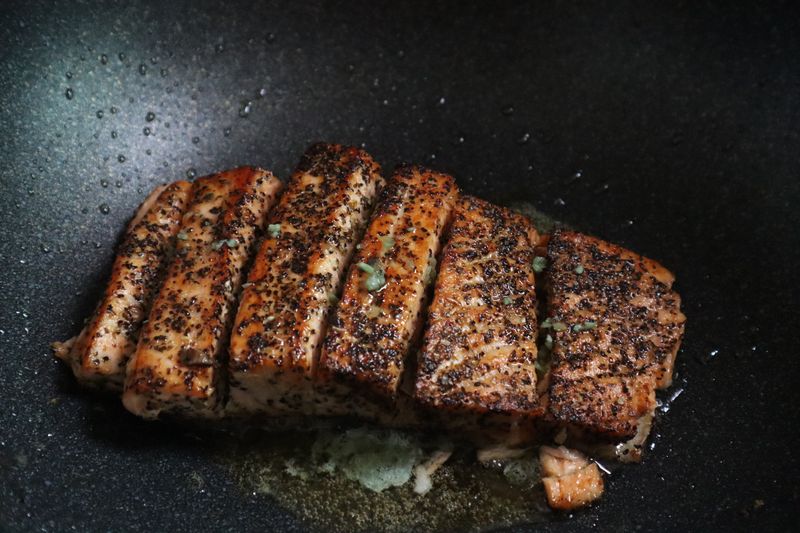
Fish, pulses cooked soft and roasted vegetables added late all belong in this category, where folding gently once is the maximum intervention.
Emulsions need agitation of a third kind
Bringing fat and water together requires energy to break the fat into droplets small enough to stay suspended, and that is vigorous rather than gentle work.
A pan sauce finished with butter is swirled hard for exactly this reason, and stopping too early leaves a greasy layer rather than a glossy one.
Heat works against it at the same time, which is why these emulsions are made off the direct flame and fail if the pan is too hot.
Choosing the implement
A flat-edged wooden spoon reaches the corner where the base meets the wall, which is where scorching begins and where a round spoon never touches.
A whisk is for dispersing and emulsifying rather than for moving mass, and using one in a thick pot mostly aerates and clogs.
A spatula folds without cutting, which is what soft ingredients need, and it also scrapes the base, making it the reasonable default for most pots.
Questions readers ask
Should I use oil or butter?
Oil for the sear because it tolerates higher temperature, then butter toward the end for flavour and browning. Butter alone burns before a good crust forms.
How do I know the pan is hot enough?
A drop of water should skitter across the surface rather than sizzle in place. For oil, it should shimmer and move freely.
Also by Orla Bannon
- Ten meals is a repertoire, and it is enoughWeeknight Dinners
- Knife skills are about the board, the grip and the speed you are not usingKitchen Kit
- Dried pulses against tins: what you actually gain by soakingPantry & Shopping
- The freezer is a pantry and most people use a third of itPantry & Shopping