Weeknight Dinners
A tin of tomatoes is four dinners depending on how hard you cook it
The same tin becomes a bright fresh sauce, a deep long-cooked one, a braising liquid or a soup base. Heat and time do all of the work.

This is written to be used rather than admired. Each section below is a decision about tinned tomatoes, and each one has a default.
Before you start
- Cooking time changes tinned tomatoes from bright and acidic to sweet and deep.
- Whole tinned tomatoes are usually better quality than the chopped version of the same brand.
- Reduction concentrates both the sweetness and the salt already present.
Whole, chopped and passata are not the same product
Whole peeled tomatoes are generally packed from fruit that held together well, and they can be broken up in the pan in seconds. Chopped tomatoes are often treated so the pieces keep their shape, which can leave them stubbornly firm however long they cook. Passata is sieved and smooth, so it starts where a cooked sauce ends and offers no texture of its own.
For most cooking the whole tin crushed by hand or with a spoon gives more control than any of the alternatives. The difference between brands is real but hard to predict, so it is worth finding one that works and staying with it.
Ten minutes gives you brightness
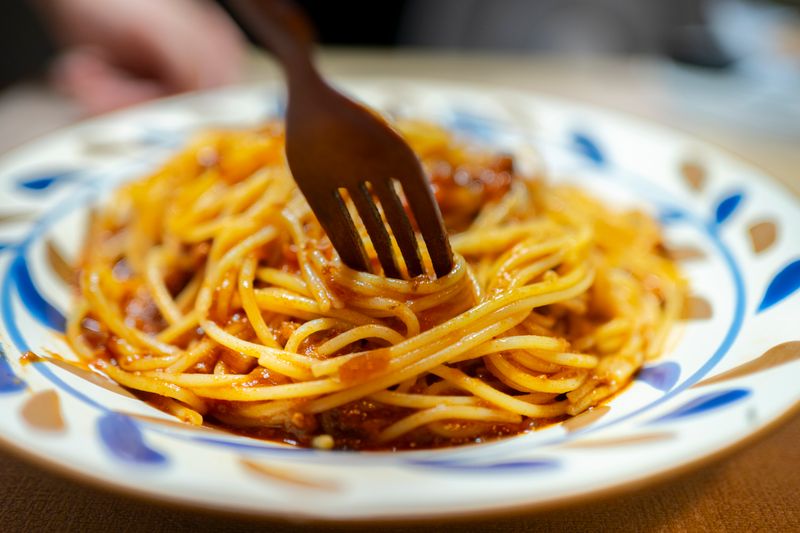
A short cook keeps the acidity and the fresh smell, which suits pasta, eggs and anything where the tomato is meant to taste raw and sharp. At this stage the sauce is still loose, so it wants a starchy pasta water or a short reduction to bind it to whatever it dresses.
In practice, garlic softened briefly in oil, the tin added, salt and a short simmer is a complete method with nothing missing from it. Adding herbs at the end rather than the start preserves their volatile aroma, which the longer cook would drive off. This version is the one that fits a genuine weeknight, and treating it as a lesser sauce is a mistake.
An hour gives you depth
Extended gentle cooking drives off water, concentrates the sugars and softens the sharp acidity into something rounder. It also breaks down the remaining structure so the sauce becomes homogeneous rather than a suspension of pieces in liquid. A long-cooked sauce clings to pasta without help, because the reduced liquid is thick enough to coat by itself.
The risk is scorching at the base once it has thickened, so the heat has to come down as the sauce reduces. This is also the version worth making in quantity, since the effort is almost entirely in the waiting rather than the work.
As a braising liquid it is doing a different job
Tinned tomatoes provide acid, liquid and body all at once, which is exactly what a braise needs from its base. The acid helps soften the connective tissue in tougher cuts over a long cook, working alongside the heat rather than instead of it.
If you are short of time, diluting the tin with stock or water is usually correct here, because a braise wants enough liquid to surround the food. The finished liquid is a sauce already, so nothing further needs to be made once the meat or the beans are tender.
This is the least appreciated of the four uses and probably the most valuable in a busy week.
Salt, sugar and the acidity question
Tins vary in how much salt they contain, so seasoning should come after tasting rather than before opening. A pinch of sugar is a common correction for a sharp tin, though a longer cook achieves the same thing without adding anything.
In practice, fat softens the perception of acidity, which is why oil, butter or cheese all make a sharp sauce taste rounder. A piece of onion or carrot cooked in the sauce and removed later adds sweetness that comes from the vegetable rather than the sugar bowl. The correction that almost never works is more herbs, since aroma does not address an acid imbalance.
Adjust seasoning at the end rather than trusting a quantity written by a stranger.
Keeping the tin useful
An opened tin should be moved out of the metal into a covered container, and used within the short window your local guidance suggests. Leftover sauce freezes well in flat portions and thaws quickly, which turns an hour of cooking into several fast dinners.
Keeping two tins permanently in the cupboard is the single cheapest insurance against having nothing to cook. Because the tin is so cheap, the quality difference between the best and the worst is worth paying for in a way it rarely is elsewhere. Once you can steer the same tin in four directions, it stops being an ingredient and starts being a method.
The takeaway
Decide how long you have first, because the cooking time is what determines which sauce you are making.
The good version is the one you can make on a Wednesday.
Questions readers ask
Whole or chopped tomatoes?
Whole, in most cases. They are usually better fruit, and they break down in the pan in seconds with a spoon or your hands.
How do I fix a sauce that tastes too sharp?
Cook it longer, or add fat. Both reduce the perception of acidity. A very small amount of sugar works too, but a longer cook is better.
Also by Naledi Mothibi
- Salt at every stage beats salt at the endTechnique
- One-pot dinners work when the liquid is doing a jobWeeknight Dinners
- Home stir frying fails because the pan gets coldWeeknight Dinners
- Heat transfer explains most of the instructions in a recipeTechnique