Weeknight Dinners
Cooking for one is a different problem, not a smaller one
Halving a recipe does not halve the effort, the washing up or the waste. Cooking for one has its own methods, and they are not the household ones scaled down.
Treat the sections below as a sequence. With cooking for one, getting the early decisions right makes the later ones much easier.
Before you start
- Fixed costs such as heating a pan and washing it do not scale with portion size.
- Ingredients are sold in household quantities, which is where most single-cook waste comes from.
- Cooking a component in full and portioning it works better than cooking one portion of a meal.
The fixed costs do not halve
Heating a pan, chopping an onion and washing up afterwards take almost exactly the same time whether you are feeding one person or four. That is why cooking for one feels disproportionately like effort, and why the takeaway looks more appealing than the arithmetic suggests it should.
The answer is not to cook less but to make each cooking session cover more than one meal. A single onion softened properly can serve two or three later dishes, which spreads the fixed cost across several dinners. Framing it this way turns the problem from a nightly one into a twice-weekly one, which is a much easier thing to sustain.
Packaging is sized for a household
A bunch of coriander, a bag of spinach and a tin of tomatoes are all portioned for a family, not for one person. The waste that follows is not carelessness, it is a mismatch between how food is sold and how it is being used. Buying loose where it is available, and buying frozen where it is not, removes most of that mismatch immediately.
On a weeknight, frozen vegetables in particular suit a single cook better than anyone, because the portion size is entirely your decision. The freezer and a set of small containers do more for a solo kitchen than any technique in this article.
Cook components, portion meals
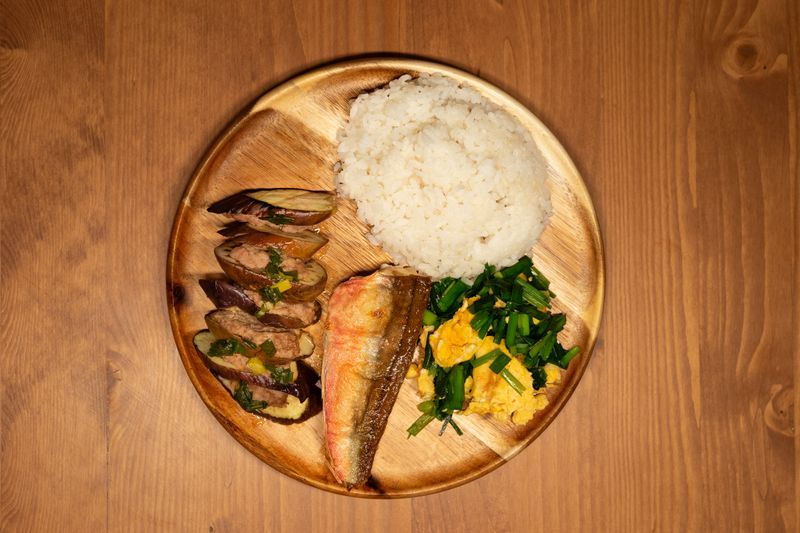
Making one portion of a complicated dish is fiddly, while making a full quantity of one component is exactly as easy as usual. A pot of grains, a tray of roast vegetables and a jar of dressing become a week of different plates rather than a week of the same dinner.
On a weeknight, because the components are neutral, they can go in three different directions without tasting like leftovers of one another. This also removes the moment of decision at seven in the evening, which is when most solo cooks give up and order in. The rule is to cook things that combine rather than things that are finished, since a finished dish can only ever be itself again.
Methods that suit one person
Eggs, tinned fish, noodles and anything on toast are not a compromise, they are genuinely appropriate cooking at this scale. A small pan and a single tray are worth owning, because a large pan spreads one portion so thin that it burns or dries.
Grilling and pan cooking suit single portions better than roasting does, since heating a large oven for one piece of food is disproportionate. Where the oven does go on, filling the rest of it with something for later is the obvious way to justify the heat.
None of this is a lesser form of cooking, and treating it as such is what leads people to skip cooking altogether.
Shopping in a smaller loop
Buying for two or three days rather than a week suits one person, because a smaller loop means less sits in the fridge unwatched. A short list built from what is already open beats a long list built from a recipe you may not feel like cooking on Thursday.
On a weeknight, ingredients that keep, such as eggs, hard cheese, root vegetables and cured items, carry more weight in a solo fridge than perishables do. Anything highly perishable should have a plan for the day it is bought and a fallback for the day after. The freezer takes the pressure off both, since a portion frozen on Monday is a dinner rescued on Thursday.
Eating alone is still eating properly
A plate, a table and five minutes without a screen changes how the same food registers, which is not a small effect. Cooking for one is also the best possible place to practise, since nobody else is affected if the experiment fails. Trying a technique on a single portion is cheap in ingredients and quick in time, which makes it the ideal learning environment.
Nine times out of ten, people who cook well for themselves usually cook better for other people, because they have made every mistake privately first. The habit worth protecting is cooking something at all, and every method here exists to lower the barrier to that.
The takeaway
Cook components in full quantities, portion them, and stop trying to shrink recipes designed for a family.
The good version is the one you can make on a Wednesday.
Questions readers ask
Is it worth cooking for one at all?
Yes, but not by making single portions of complicated dishes. Cook full quantities of simple components and combine them differently across several days.
How do I stop wasting fresh ingredients?
Buy in a shorter loop, lean on frozen and long-keeping items, and freeze half of anything perishable on the day it comes home.
Also by Piotr Wesely
- The tray bake is the most underrated weeknight methodWeeknight Dinners
- The short list of kitchen equipment that earns its spaceKitchen Kit
- Fifteen minutes is a shopping decision, not a cooking speedWeeknight Dinners
- Mise en place is not fussiness, it is the reason nothing burnsWeeknight Dinners