Baking
Baking is chemistry, and that is why substitutions fail
Swapping ingredients in a cake is not like swapping them in a stew. The quantities are performing structural jobs.
There is a settled way of talking about baking substitutions. It is worth asking how much of it survives contact with the detail.
The argument in brief
- Flour provides structure, fat provides tenderness, and sugar does far more than sweeten.
- Chemical leaveners need the right acid and the right timing.
- Weighing rather than measuring by volume removes most inconsistency.
Every ingredient has a structural job
Flour builds the gluten and starch network that holds the crumb together. Fat coats flour particles and shortens gluten strands, which is what makes a cake tender rather than chewy.
Sugar sweetens, and it also holds moisture, aids browning, softens the crumb and affects how much the batter spreads. Reducing sugar in a recipe therefore changes texture and colour as well as sweetness, which is why low-sugar bakes so often disappoint.
Leavening needs the right partner
Bicarbonate of soda requires an acid — buttermilk, yoghurt, treacle, cocoa — to produce gas, and without one it leaves a soapy taste. Baking powder contains its own acid and works without one, which is why the two are not interchangeable by volume.
Double-acting powders release gas twice, at mixing and at heat, which gives a little more tolerance for delay. Both weaken on the shelf, and a spoonful dropped into hot water or vinegar will fizz visibly if it still has any life in it, which takes ten seconds and explains a great many flat cakes.
How long you mix is an ingredient
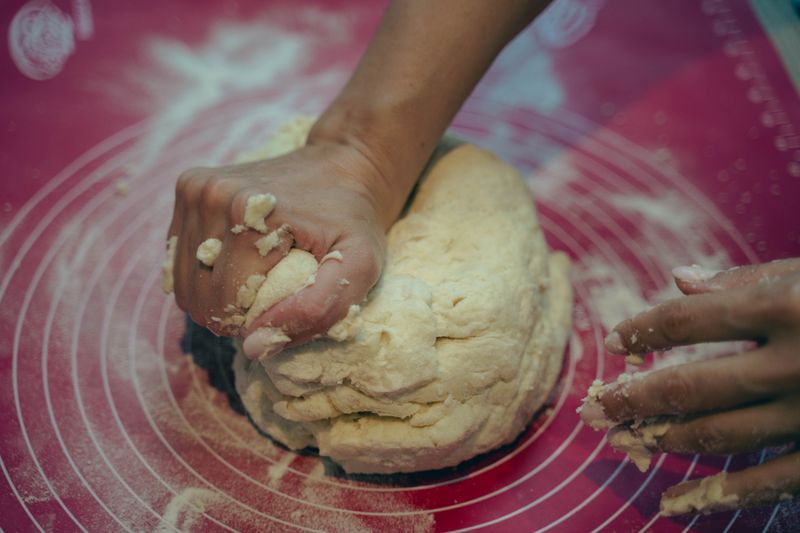
Flour starts building gluten the moment it meets liquid, which is the point in bread and the reason overmixed cakes and muffins come out tough with tunnels running through them. That is why recipes say to fold until only just combined and mean it literally: a few streaks of flour disappear in the oven, and thirty extra seconds of beating does not.
The part that matters: creaming is the opposite instruction, since there the aim is to beat air into fat over several minutes while no flour is present at all. Knowing which of those stages you are in accounts for most of the apparently contradictory mixing instructions inside a single recipe.
Weight beats volume
A cup of flour can vary by a substantial margin depending on whether it was scooped or spooned. That variation is enough to move a cake from tender to dry, and it is the most common reason a recipe works for one person and not another. Scales are inexpensive and remove the whole category of problem.
Water-based liquids are the honest exception, since a millilitre of water weighs a gram and jugs are accurate enough for them; it is the dry ingredients where the error accumulates.
Temperature of ingredients matters
Creaming butter and sugar works because the sugar crystals cut air into fat at the right consistency, which requires the butter to be genuinely soft and not melted. Cold eggs added to creamed butter can cause the mixture to split, which loses the air already incorporated.
If you are short of time, room temperature in a recipe is an instruction, not a suggestion. Oven temperature is the other half of it, and most domestic ovens run off their dial by a noticeable margin, which a cheap oven thermometer settles once instead of being guessed at every bake.
Substitute freely; the method matters more than the shopping list.
Which substitutions are actually safe
Swapping flavourings, nuts, dried fruit and extracts is generally low risk. Swapping flour type, fat type, sugar quantity or leavening changes the structure and needs the recipe adjusted rather than the ingredient replaced.
On a weeknight, for dietary substitutions, using a recipe developed for that substitution is far more reliable than adapting one that was not. Tin size is the substitution nobody counts as one, and the same batter in a deeper or narrower tin changes the baking time and often the texture more than swapping an ingredient would have.
The takeaway
Weigh everything, and treat sugar and flour as structure rather than as flavour.
Taste it before it leaves the pan. That is most of cooking.
Questions readers ask
Can I reduce the sugar in a cake?
A little, usually up to around ten to fifteen per cent, with some loss of moisture and browning. Larger reductions need a recipe designed for it.
Why did my cake sink in the middle?
Commonly too much leavening, opening the oven too early, or underbaking. All three cause the structure to set later than the rise.