Technique
Sweating, sauteing and frying are three temperatures with three aims
Recipes use these words as though they were synonyms for putting something in a pan. They describe different heat levels and produce entirely different results.
The theory of sweating and sauteing is well covered elsewhere. This is about the version you meet in practice.
What holds up in practice
- Sweating uses low heat to soften without colour, often under a lid.
- Sauteing uses higher heat and movement to cook quickly with light colour.
- Frying uses enough fat and heat to brown the surface decisively.
Three words for three heat levels
Sweating means cooking gently enough that the food releases moisture and softens without any browning taking place at all. Sauteing means moving food around a moderately hot pan so it cooks through quickly with only light colour developing. Frying, in the shallow sense used in most home recipes, means enough heat and enough fat to brown the surface properly.
A recipe that says to fry an onion until soft and translucent is actually describing a sweat, and following it literally overshoots. Learning which one a step really wants is more useful than any individual recipe, because the same three appear everywhere.
What sweating is for
Onions, leeks, celery and peppers all contain a great deal of water, and gentle heat draws it out without setting the sugars browning. The resulting flavour is soft and sweet rather than roasted, which is the correct base for many soups, stews and sauces.
In practice, a lid helps enormously, because the trapped moisture keeps the pan temperature down and prevents the edges from catching. A pinch of salt at the start accelerates the process, since salt draws water out of the cells rather than sealing it in. Sweating cannot be rushed with more heat, because more heat simply changes it into a different technique with a different flavour.
What sauteing is for
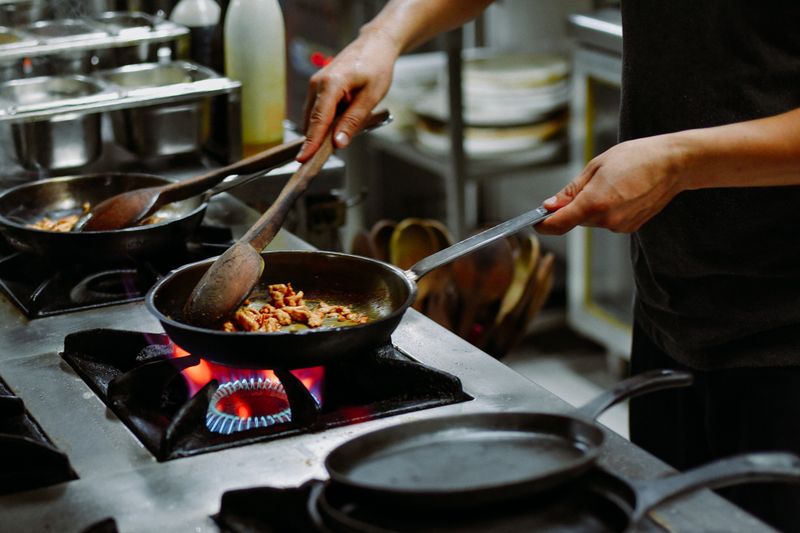
The name refers to the food jumping in the pan, and that movement is what stops any one face sitting long enough to brown deeply. It suits small pieces that cook through quickly, since the technique gives every surface a short exposure rather than a long one. The pan needs to be hot before anything goes in, because a slow start turns a saute into an accidental sweat.
Crowding is the usual failure, as too much food at once drops the temperature and releases moisture faster than it can evaporate. Done properly it produces food that is cooked, lightly coloured and still distinct rather than merged into a soft mass.
What frying is for
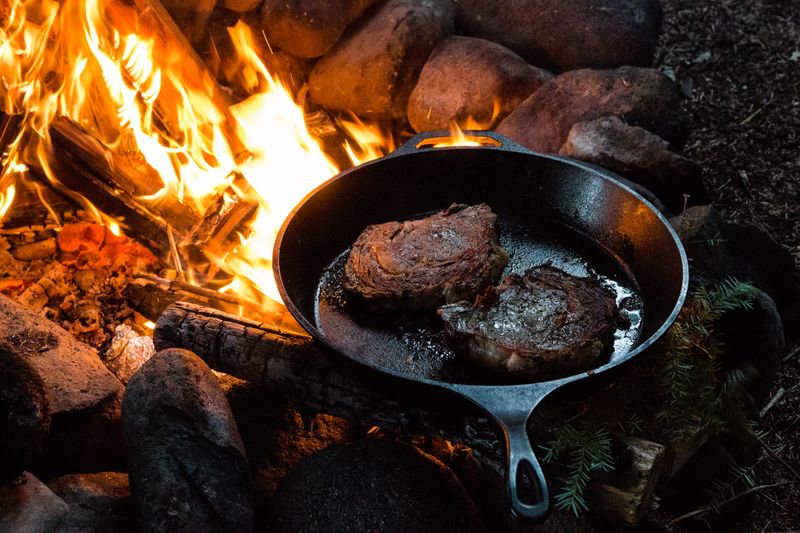
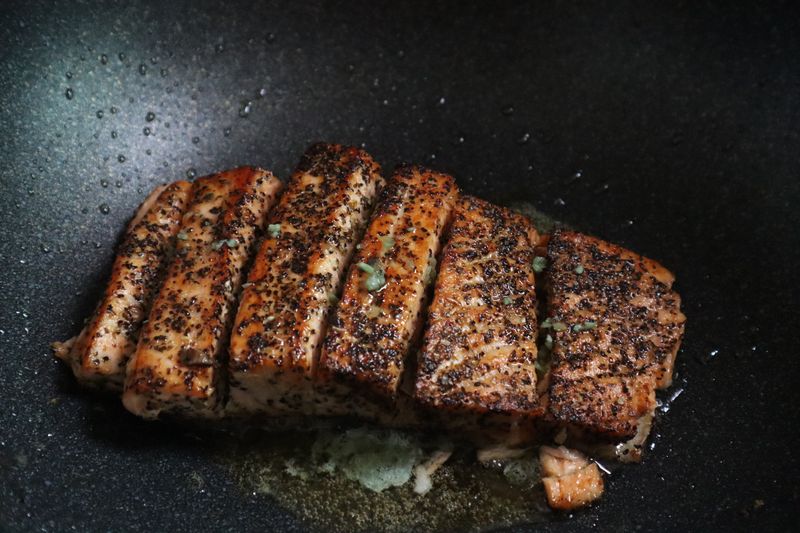
Real browning needs the food surface to exceed the boiling point of water, which cannot happen while the surface is still wet. That means a dry surface, a hot pan and enough fat to make contact across the irregularities of the food.
If you are short of time, fat matters more here than in the other two, because it conducts heat into the parts of the surface that metal cannot touch. The temperature is high enough that timing becomes short and attention becomes necessary, unlike the long unattended sweat.
This is the technique that produces the flavours people associate with restaurant cooking, and it is mostly a matter of nerve about heat.
How to tell which one you are doing
Listen to the pan, because a sweat is nearly silent, a saute sizzles steadily and frying is loud and continuous. Look for steam rising, which indicates water leaving the food, and for the absence of steam, which means browning can begin.
Nine times out of ten, watch the colour of the fat, since fat that has gone from clear to shimmering has passed out of the sweating range. Feel the resistance when you stir, as softened vegetables offer almost none while browning ones catch slightly on the metal. These signals are more reliable than any dial setting, since hobs vary enormously in the actual heat a given number produces.
Moving between them in one dish
Many recipes use all three in sequence, sweating a base, sauteing an addition and frying a protein separately before combining. The order almost always runs from hottest to gentlest or the reverse, depending on which element needs the residue in the pan. Turning the heat down after browning is a step that recipes frequently omit, and skipping it burns the base of the dish.
At the stove, adding liquid resets the pan to a wet method immediately, which is why the browning has to be finished before anything is poured in. Thinking in these three modes rather than in recipe steps makes it possible to cook without a recipe at all.
The takeaway
Decide which of the three a step wants before you turn the dial, and let the sound of the pan confirm it.
Get the heat and the salt right and the rest is detail.
Questions readers ask
What does it mean when a recipe says to soften an onion?
It means sweating: low heat, a little fat, often a lid, and no colour. If the edges are browning, the heat is too high for what the step is asking for.
Why does my food never brown properly?
Almost always a wet surface, a crowded pan or a pan that was not hot enough at the start. All three keep the surface at the temperature of evaporating water.
Also by Naledi Mothibi
- Salt at every stage beats salt at the endTechnique
- One-pot dinners work when the liquid is doing a jobWeeknight Dinners
- Home stir frying fails because the pan gets coldWeeknight Dinners
- Heat transfer explains most of the instructions in a recipeTechnique