Pantry & Shopping
Grocery Pickup Changes What Ends Up In The Cart
Ordering online removes impulse purchases and removes the ability to judge produce, which shifts a household's shopping toward staples and away from discovery.

Ordering groceries online and collecting them changes more than the errand. It changes which foods enter the house, because the selection process is different.
Impulse buying largely disappears
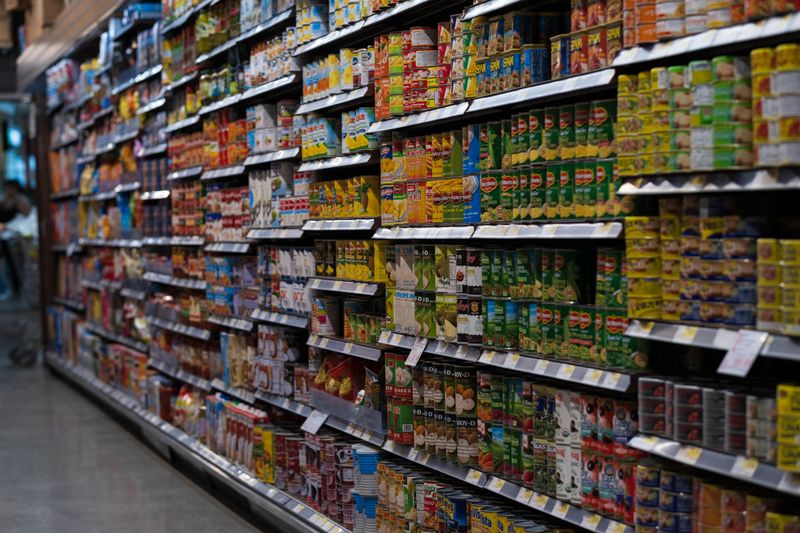
Store layouts are designed so that shoppers pass displays on the way to staples, and a substantial share of purchases are decided in the aisle rather than at home.
An online cart removes almost all of that exposure. You search for what you intended to buy and the surrounding shelf never appears.
That reliably narrows the basket toward the list, which is a saving for the budget and a loss for variety, since nothing unplanned makes it home.
You cannot judge the produce
Selecting fruit and vegetables involves weight, firmness, smell and color, none of which transmits through a product photo and a description.
A picker chooses on your behalf using their own judgment and whatever is nearest to hand, and ripeness in particular is not something they can guess for your schedule.
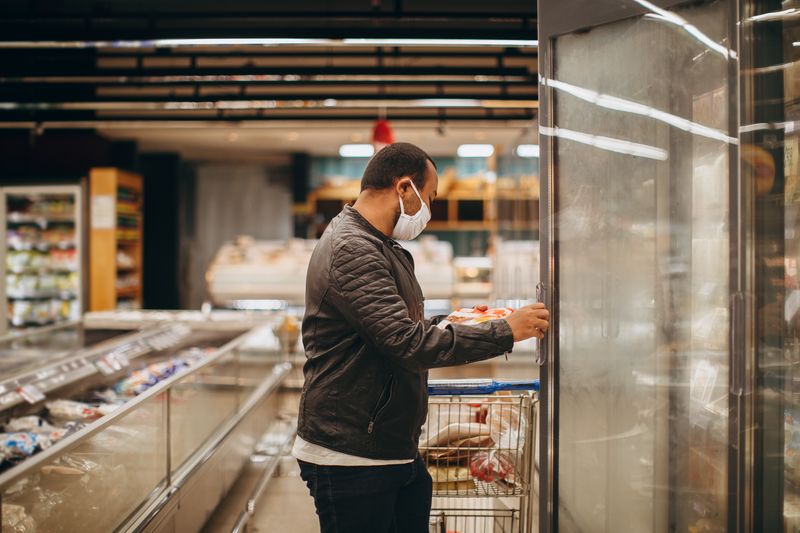
Households that use pickup often keep buying produce in person, or shift toward frozen and canned versions where the condition is predictable and the picker's choice does not matter.
Substitutions are a real variable
Out-of-stock items are replaced by whatever the store considers equivalent, which can be a different brand, a different size or a genuinely different product.
That matters most where format carries meaning, such as whole versus diced tomatoes, or a cut of meat where the name on the label and the muscle underneath differ.
Setting substitution preferences per item, or declining them for the ones that matter, prevents a recipe from being quietly redesigned before you get home.
The list becomes the planning document
Because there is no aisle to jog your memory, forgetting something is more consequential. There is no walking past the shelf and remembering you are out.
The cart itself partly solves this, since previous orders are stored and can be reordered, which turns routine staples into a repeatable list rather than a weekly recall exercise.
The risk is that the list ossifies. Reordering the same items indefinitely means the household eats the same things indefinitely, unless something deliberately breaks the pattern.
Where the time actually goes
The trip is shorter, but the ordering itself takes time at a screen, and the total is often closer than it appears.
What genuinely changes is when that time is spent. Building a cart happens in fragments across a week, while a store trip is a single block on a specific afternoon.
For a household where the constraint is a solid hour rather than total minutes, that redistribution is the actual benefit, regardless of whether the arithmetic favors either method.
Questions readers ask
How can I tell if fish has gone off?
A strong ammonia or sour smell is the clearest sign, and any doubt is a good reason not to eat it. Fish spoils quickly, so buy it for the day you will cook it.
Is farmed fish worse than wild?
It depends heavily on the species and the farming method, and both categories contain good and poor practice. Current guidance from a national or regional sustainability body is more useful than a blanket rule.
Also by Sana Iqbal
- Cook the components, not the mealsBatch & Leftovers
- Stock is the cheapest upgrade available to a home cookBatch & Leftovers
- Roast a chicken once and you have bought three dinnersBatch & Leftovers
- Cooling food quickly is the step almost everyone skipsBatch & Leftovers