Baking
Pizza at home is a schedule problem before it is a recipe
The dough is simple and the toppings are a matter of taste. What decides whether it works is when the dough was mixed and how hot the surface is.
This is less a set of instructions about pizza dough at home than an argument, and it is worth saying so at the start.
The argument in brief
- A long slow fermentation improves flavour and makes the dough easier to stretch.
- Domestic ovens run far cooler than the ovens the style was designed for.
- A preheated heavy surface compensates for much of the missing temperature.
The dough wants time, not skill
A pizza dough is flour, water, salt and a small amount of yeast, and the ingredients are not where the difficulty lies. What separates a good base from a mediocre one is almost entirely how long it fermented and at what temperature. A dough mixed in the morning or the previous day develops flavour that a rushed one simply cannot.
Long fermentation also relaxes the gluten, which is why an aged dough stretches willingly while a fresh one snaps back. This makes pizza a planning exercise, and the planning is the part most home attempts skip.
Cold fermentation fits a working week
A dough left in the fridge ferments slowly, which spreads the process across a period that suits a household schedule. The reduced temperature slows the yeast dramatically without stopping the enzymatic activity that produces flavour. Using less yeast for a longer cold rise gives a better result than more yeast for a short warm one.
At the stove, the dough should come back towards room temperature before shaping, or it will fight you the whole way. This approach means the active work happens on two separate days, neither of which is demanding.
Your oven is the limiting factor
The style most people are trying to reproduce was developed in ovens that run far hotter than any domestic appliance. At a lower temperature the base dries out before it colours, which is why homemade pizza can be pale and biscuity.
The correction is to maximise what your oven can do rather than to accept a lower temperature and a longer bake. That means the highest setting, a long preheat and heat delivered into the base as quickly as possible. Understanding this is what turns a disappointing result into a good one without changing the dough at all.
Thermal mass does the work
A heavy preheated surface stores a large amount of heat and delivers it into the base on contact. A thin baking tray holds almost none, which is why a pizza on a cold tray never develops a proper base. A stone, a steel or an upturned heavy pan all work by the same principle and need a genuinely long preheat.
The part that matters: half an hour or more at full temperature is usually needed for the mass to reach the temperature of the oven.
Cooking the base briefly before adding wet toppings is a reasonable workaround where the oven is particularly weak.
Wet toppings are the other half
Every wet ingredient releases water during the bake, and that water has to go somewhere before the base can crisp. A generous layer of sauce and a pile of vegetables guarantees a soft centre regardless of how hot the oven is. Restraint is the technique, with a thin layer of sauce and toppings applied sparingly rather than heaped.
Vegetables that release a lot of water are better cooked first, so they arrive on the base already drained. Adding delicate ingredients after the bake rather than before preserves them and keeps their moisture off the base.
Substitute freely; the method matters more than the shopping list.
Shaping without a rolling pin
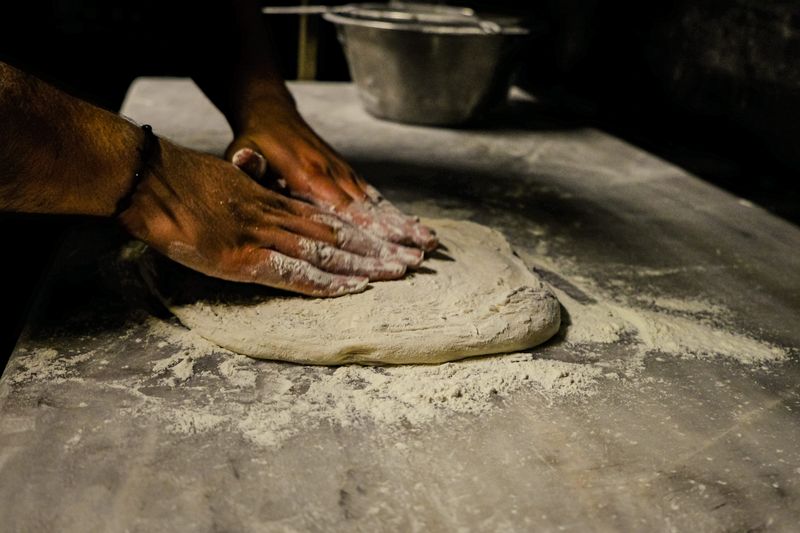
A rolling pin presses out the gas that fermentation produced, which is exactly what gives the edge its structure. Stretching with the hands preserves the gas at the rim while thinning the centre.
In practice, working from the centre outwards and letting gravity help is easier than trying to stretch it flat on a surface. A well-fermented dough cooperates with this, which is another reason the timing matters more than the technique. Getting it onto the hot surface quickly and confidently is the last hurdle, and plenty of flour underneath is the answer.
The takeaway
Mix the dough a day early, preheat something heavy for half an hour, and use far less topping than feels right.
The good version is the one you can make on a Wednesday.
Questions readers ask
How far ahead should I make pizza dough?
At least several hours, and a day or more in the fridge is better. Long cold fermentation improves both the flavour and the stretchiness.
Why is my base pale and dry?
The oven is not delivering enough heat into the base quickly enough. Preheat a heavy stone, steel or pan for at least half an hour at the highest setting.