Baking
Salt in bread is structural, not just seasoning
Leave it out and the dough behaves differently before it ever reaches the oven. The taste is the least of it.

Comparisons of salt in bread dough usually pick a winner. This one picks the circumstances, which is more useful.
The difference in one place
- Salt tightens the gluten network and makes dough easier to handle.
- It slows yeast activity, which controls the pace of fermentation.
- Unsalted bread tastes noticeably flat and stales faster.
What salt does to the dough
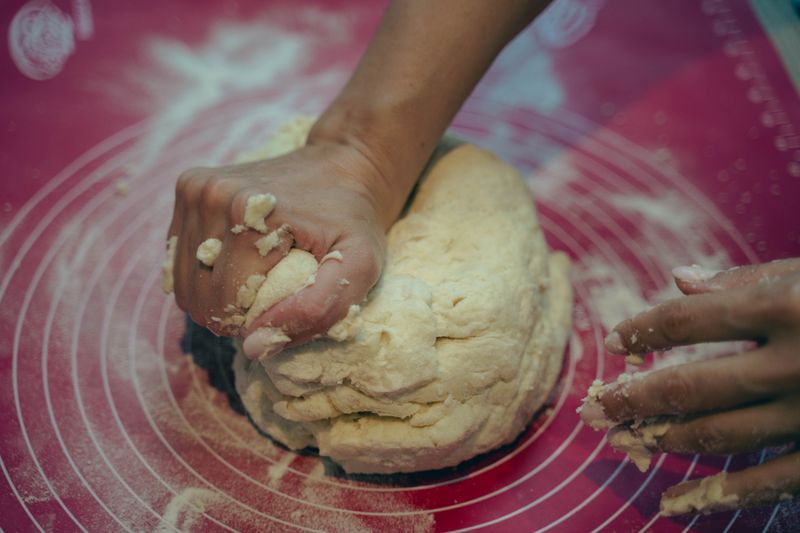
Salt strengthens the gluten network, making the dough less slack and more able to hold gas. A dough made without it feels sticky and loose, and bakers who forget the salt usually notice by feel before they taste anything.
That tightening is why salt is sometimes added a little after mixing rather than at the very start. The effect is real but modest, and it shows up most in wetter doughs where handling is already marginal.
It controls the pace of fermentation
Salt slows yeast activity, which is what keeps a long fermentation from running away. A saltless dough ferments faster and can overprove before the flavour has had time to develop. Because of this, salt quantity and fermentation time are linked, and cutting one usually means adjusting the other.
In hot weather the same dough ferments faster still, which is why bakers watch dough rather than clocks.
Flavour and staling
Bread without salt tastes not just unsalted but flat, because salt suppresses bitterness and brings out the wheat. Salt is hygroscopic, holding some moisture in the crumb, which slows staling slightly. Traditional unsalted breads exist and are made to be eaten with strongly seasoned food, which is the point of them.
At the stove, typical quantities in bread recipes are around two per cent of the flour weight, and the range in use is narrow for good reason.
Yeast, salt and direct contact
The old advice never to let salt touch yeast is overstated, since brief contact in a mixing bowl does little harm. Prolonged direct contact in a concentrated form will damage yeast cells through osmosis. In practice, adding them to opposite sides of the flour is a cheap insurance policy that costs nothing.
The real risk is with fresh yeast and undissolved salt sitting together, not with a moment in a bowl.
Measuring it properly
Because different salts have very different densities, a teaspoon means very little in a bread recipe. Weighing salt and expressing it as a percentage of flour weight is how bakers avoid the problem entirely. That percentage system, known as bakers percentages, also makes scaling a recipe up or down trivial.
On a weeknight, fine salt dissolves more readily into a dough than flakes, which is one reason many bread recipes specify it.
Adjust seasoning at the end rather than trusting a quantity written by a stranger.
Adjusting it deliberately
Reducing salt for dietary reasons is entirely possible, and the dough will simply need watching more closely as it ferments faster. Anyone reducing salt for medical reasons should be guided by their own clinician rather than a baking article. Increasing salt beyond the usual range slows fermentation noticeably and eventually tastes wrong.
Nine times out of ten, the narrow standard range exists because it balances handling, timing and taste simultaneously.
Side by side
| Consideration | What it means in practice |
|---|---|
| What salt does to the dough | Salt tightens the gluten network and makes dough easier to handle. |
| It controls the pace of fermentation | It slows yeast activity, which controls the pace of fermentation. |
| Flavour and staling | Unsalted bread tastes noticeably flat and stales faster. |
The takeaway
Weigh the salt as a percentage of the flour, and watch the dough rather than the clock if you change it.
The good version is the one you can make on a Wednesday.
Questions readers ask
What happens if I forget the salt?
The dough will feel slack and ferment fast, and the bread will taste flat and stale sooner. It is edible, and you will notice.
Can I add salt later in the process?
Yes, and some bakers deliberately hold it back for a period to speed early gluten development. It is a technique rather than a rescue.