Baking
Bakers percentages make every recipe adjustable
Expressing every ingredient against the flour turns a fixed recipe into a formula you can scale, compare and change on purpose.
These are listed in the order worth acting on, which with bakers percentages is not the order they are usually presented in.
What matters most
- Flour is always one hundred per cent and everything else is measured against it.
- Hydration percentage predicts how a dough will handle.
- The system makes different recipes directly comparable.
How the system works
Total flour weight is set at one hundred per cent, and every other ingredient is expressed as a percentage of that weight. A dough with seven hundred grams of water to a kilogram of flour is therefore seventy per cent hydration. The percentages add up to more than a hundred, which confuses people at first and stops mattering immediately.
It is a bakery convention rather than mathematics, and its whole value is comparability.
Hydration tells you how it will feel
Lower hydration doughs are stiff, easy to handle and give a tighter crumb, which suits sandwich loaves and bagels. Higher hydration doughs are slack and sticky and give a more open, moist crumb, which suits rustic loaves.
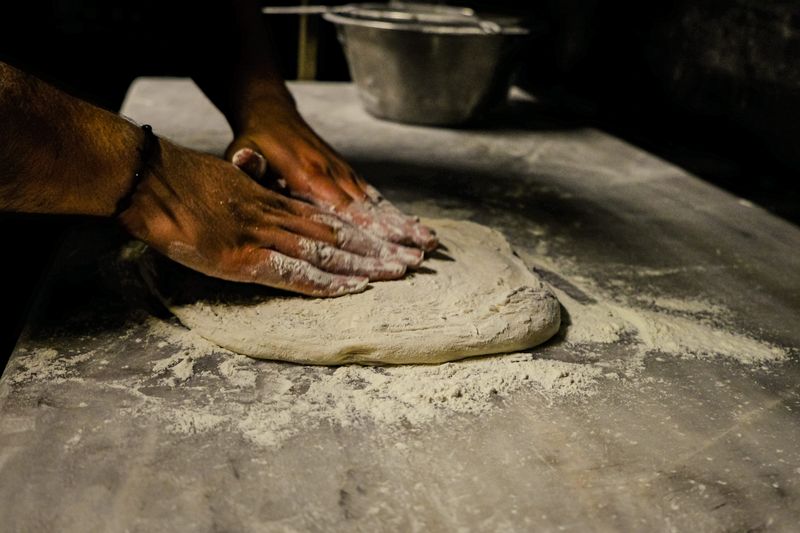
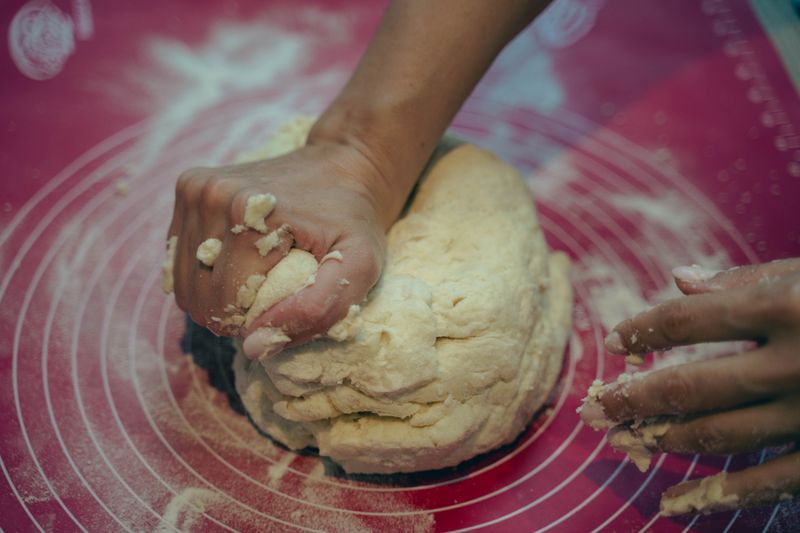
Knowing the number before you start tells you whether to expect a dough you can knead on a surface or one you must fold in a bowl. Different flours absorb different amounts of water, so the same percentage feels different with wholemeal or a high-protein flour.
Scaling becomes arithmetic
To make half as much, halve the flour and recalculate everything from the percentages, which takes seconds. To fit a specific tin, work backwards from the dough weight you need rather than guessing at multiples. This is why bakeries write formulas rather than recipes, since the same formula makes two loaves or two hundred.
The part that matters: it also removes the errors that creep in when you scale a recipe written in cups and spoons.
Comparing recipes honestly
Two bread recipes with different quantities may be the same formula, and percentages reveal that instantly. They also reveal genuine differences, such as one enriched recipe having twice the fat and sugar of another. Standard ranges exist for a reason: bread salt sits near two per cent, and most straight doughs fall in a familiar hydration band.
A recipe far outside those ranges is doing something deliberate, and knowing that is useful before you start.
Changing one thing on purpose
Raising hydration by a few per cent at a time is how bakers move toward an open crumb without producing an unmanageable puddle. Adding fat tenderises and softens the crumb; adding sugar slows fermentation at higher levels and speeds browning. Each change can be recorded as a number rather than a vague memory of what you did.
That record is what makes the tenth loaf better than the ninth rather than merely different.
It applies beyond bread
Cakes, pastry and batters can all be expressed the same way, and classic ratios exist for many of them. A shortcrust at roughly half fat to flour and a pound cake with equal weights of four ingredients are ratio recipes in disguise. Once you see them as ratios, you can adjust quantities to what you have rather than shopping for a recipe.
The part that matters: the prerequisite for all of this is a set of scales, which is the real barrier for most home bakers.
Everything above, in order of what to do first
- How the system works. Total flour weight is set at one hundred per cent, and every other ingredient is expressed as a percentage of that weight.
- Hydration tells you how it will feel. Lower hydration doughs are stiff, easy to handle and give a tighter crumb, which suits sandwich loaves and bagels.
- Scaling becomes arithmetic. To make half as much, halve the flour and recalculate everything from the percentages, which takes seconds.
- Comparing recipes honestly. Two bread recipes with different quantities may be the same formula, and percentages reveal that instantly.
- Changing one thing on purpose. Raising hydration by a few per cent at a time is how bakers move toward an open crumb without producing an unmanageable puddle.
- It applies beyond bread. Cakes, pastry and batters can all be expressed the same way, and classic ratios exist for many of them.
The takeaway
Set flour at one hundred, write everything else against it, and change one percentage at a time.
The good version is the one you can make on a Wednesday.
Questions readers ask
Do I need scales for this?
Yes. The system is built on weight and does not translate to volume measures, which vary too much to be useful for the flour in particular.
What hydration should I start at?
Something moderate that you can handle on a surface, then increase gradually as your handling improves. Starting at a fashionable high number mostly produces frustration.