Baking
Humidity Changes How Much Flour A Dough Takes
Flour absorbs moisture from the air, so the same recipe needs different amounts of liquid in a humid August kitchen than in a dry January one.

A bread recipe that worked in February can turn sticky and slack in July, with nothing changed but the weather. Flour is hygroscopic, and the air in your kitchen is part of the recipe.
Flour is never as dry as the bag suggests
Milled flour arrives with moisture already in it, and that amount keeps moving. Stored in a paper sack or a canister with an imperfect seal, it trades water with the surrounding air.
In a humid stretch, that flour has taken on weight that is not starch or protein. You measure out the same cup and get less actual flour than the recipe assumed.
In dry winter air, the reverse happens. The flour has given up moisture, so the same measure is drier and thirstier, and the dough comes together stiff.
Hydration is a ratio, not a number
Bakers talk about hydration as the weight of water against the weight of flour. That ratio is what actually governs how a dough behaves, not the volume printed in a recipe.
If the flour already carries extra water, the effective hydration climbs even though you added exactly the liquid called for. The dough spreads instead of holding a shape.
This is why experienced bakers hold back a portion of the liquid and add it once they see how the dough is coming together. The recipe is a starting estimate.
The dough tells you before the oven does
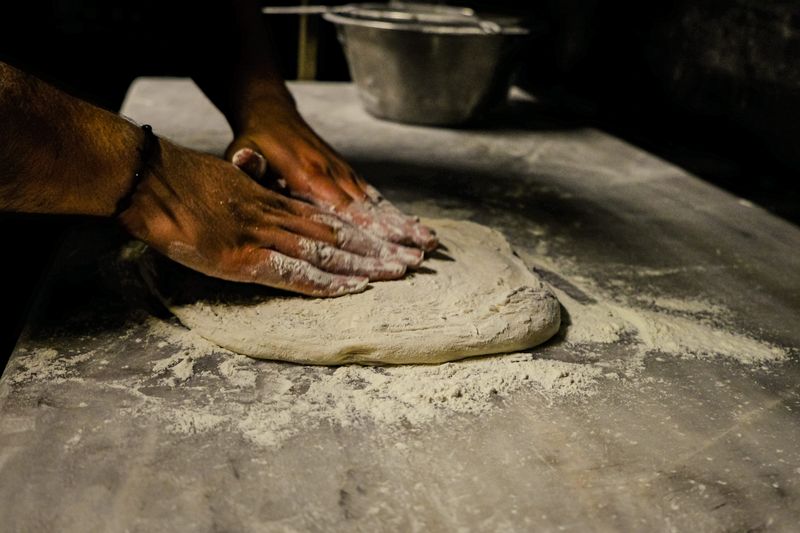
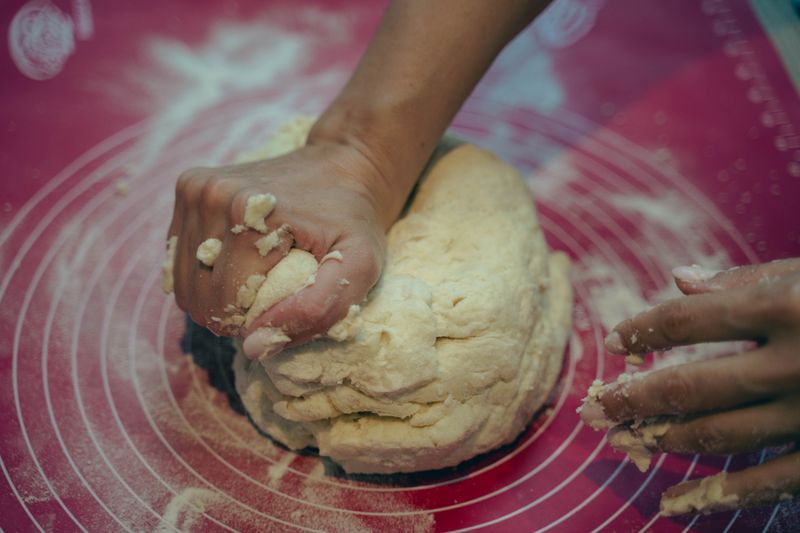
A properly hydrated dough clears the side of the bowl but still tacks lightly to a finger. That feel is more reliable than any measurement you can take at the counter.
Slack, soupy dough on a humid day usually needs flour added a spoonful at a time, worked in fully before judging again. Dumping in a half cup overcorrects immediately.
A stiff winter dough responds to water the same way, added in small amounts with time to absorb. Both corrections are easier at the mixing stage than after the first rise.
Some baked goods care far more than others
Yeasted breads and pie doughs are the most sensitive, because their structure depends on how much gluten develops and how the fat stays separate from the flour.
Cakes and muffins are more forgiving. Their higher sugar and fat content buffers small swings in flour moisture, and the batters are pourable rather than shaped by hand.
Meringues and anything relying on dissolved sugar sit at the other extreme. Sugar pulls water from humid air readily, which is why they weep on a muggy afternoon.
Weighing removes most of the guesswork
A kitchen scale fixes the packing problem entirely, since a scooped cup can vary substantially depending on how the flour was settled beforehand. Weight is the same every time.
Weighing does not remove the moisture swing, because damp flour still weighs more per unit of starch. It does shrink the variable to one thing you can adjust for.
Once the flour weight is fixed, the only dial left is liquid, and you can move it deliberately by season rather than wondering which of two variables went wrong.
Questions readers ask
Do I need scales for this?
Yes. The system is built on weight and does not translate to volume measures, which vary too much to be useful for the flour in particular.
What hydration should I start at?
Something moderate that you can handle on a surface, then increase gradually as your handling improves. Starting at a fashionable high number mostly produces frustration.