Batch & Leftovers
Doubling a recipe is not the same as multiplying it
The ingredients scale linearly. The pan, the evaporation and the seasoning do not, which is why big batches often disappoint.
This is less a set of instructions about scaling recipes than an argument, and it is worth saying so at the start.
The argument in brief
- Surface area does not increase in proportion to volume.
- Evaporation, browning and cooking time all change when quantity does.
- Salt and strong seasonings often need less than a straight multiplication.
Volume and surface do not scale together
Doubling the contents of a pot roughly doubles the volume but increases the surface area much less. That means proportionally less evaporation, so a doubled sauce or stew comes out looser than the original. It also means slower heating and slower cooling, since heat enters and leaves through that surface.
Almost every scaling problem comes back to this one geometric fact.
Browning gets harder
Twice the food in the same pan crowds it, drops the temperature and steams instead of browning. The answer is either a wider pan or browning in batches, and batches are usually the practical choice.
Skipping the browning because there is more to do is exactly the wrong response, since depth of flavour is what a large batch most needs. Two trays in the oven behave differently from one, and swapping their positions partway through evens it out.
Timing changes in both directions
A larger volume takes longer to come to temperature and longer to reduce, so total time increases. The active cooking time for each piece does not change, since a chicken thigh is still a chicken thigh.
Recipes that state a time for the whole pot will therefore be wrong when scaled, and the tests for doneness still work. Judging by texture, consistency and taste rather than the printed time is the only reliable approach at a different scale.
Seasoning is not linear either
Strong aromatics such as chilli, garlic and spices frequently need less than a straight multiplication, because perception is not proportional. Salt is closer to linear, but because a bigger batch reduces less, the final concentration ends up different. Adding around three quarters of the multiplied amount and then adjusting at the end is a reasonable working approach.
Tasting at the end and correcting is what makes the difference, and it is easier than reasoning about it in advance.
Baking barely scales at all
Cake batters depend on tin depth, and the same mixture in a deeper tin bakes at a different rate and can dome or sink. Leavening does not simply double, since gas production and structure setting are timed against each other. The reliable approach in baking is to make two batches or use a recipe written for the larger quantity.
At the stove, bread scales more readily by weight, which is one of the practical advantages of the percentage system.
Adjust seasoning at the end rather than trusting a quantity written by a stranger.
Batch cooking specifics
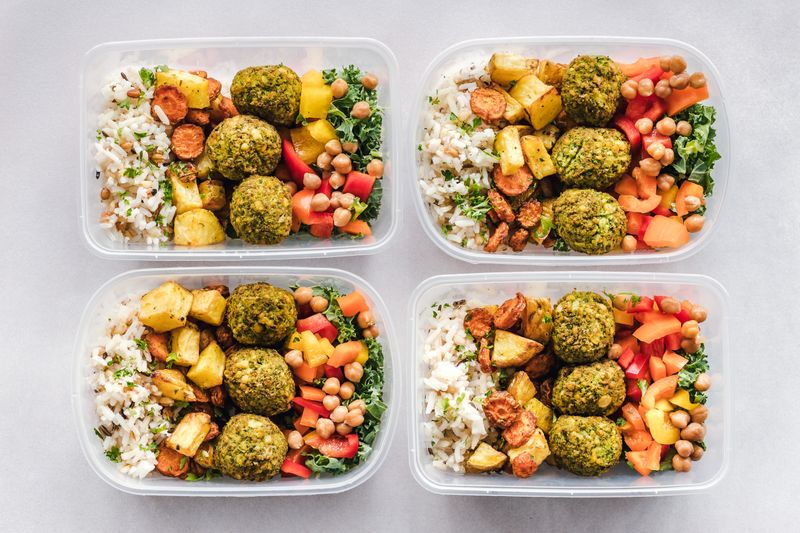
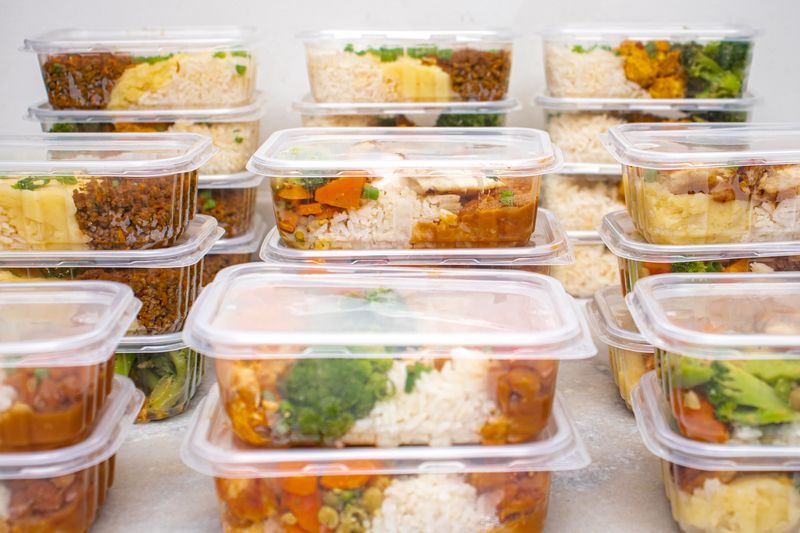
A large batch takes far longer to cool, which is exactly the situation your national food safety guidance is written about. Dividing into shallow containers as soon as it is cooked solves both the cooling problem and the portioning one.
Some elements are better cooked fresh, so scale the base and cook the delicate parts to order. Writing down what you actually did makes the next large batch better rather than another experiment.
The takeaway
Use less liquid, brown in batches, season to three quarters and adjust at the end.
Get the heat and the salt right and the rest is detail.
Questions readers ask
Can I just double everything?
For a stew you will get away with it, with less liquid and a longer time. For baking, and for anything relying on browning or reduction, you need to adjust rather than multiply.
Should I use a bigger pan?
Usually yes, and a wider one rather than a deeper one, since width gives you the surface area that evaporation and browning need.